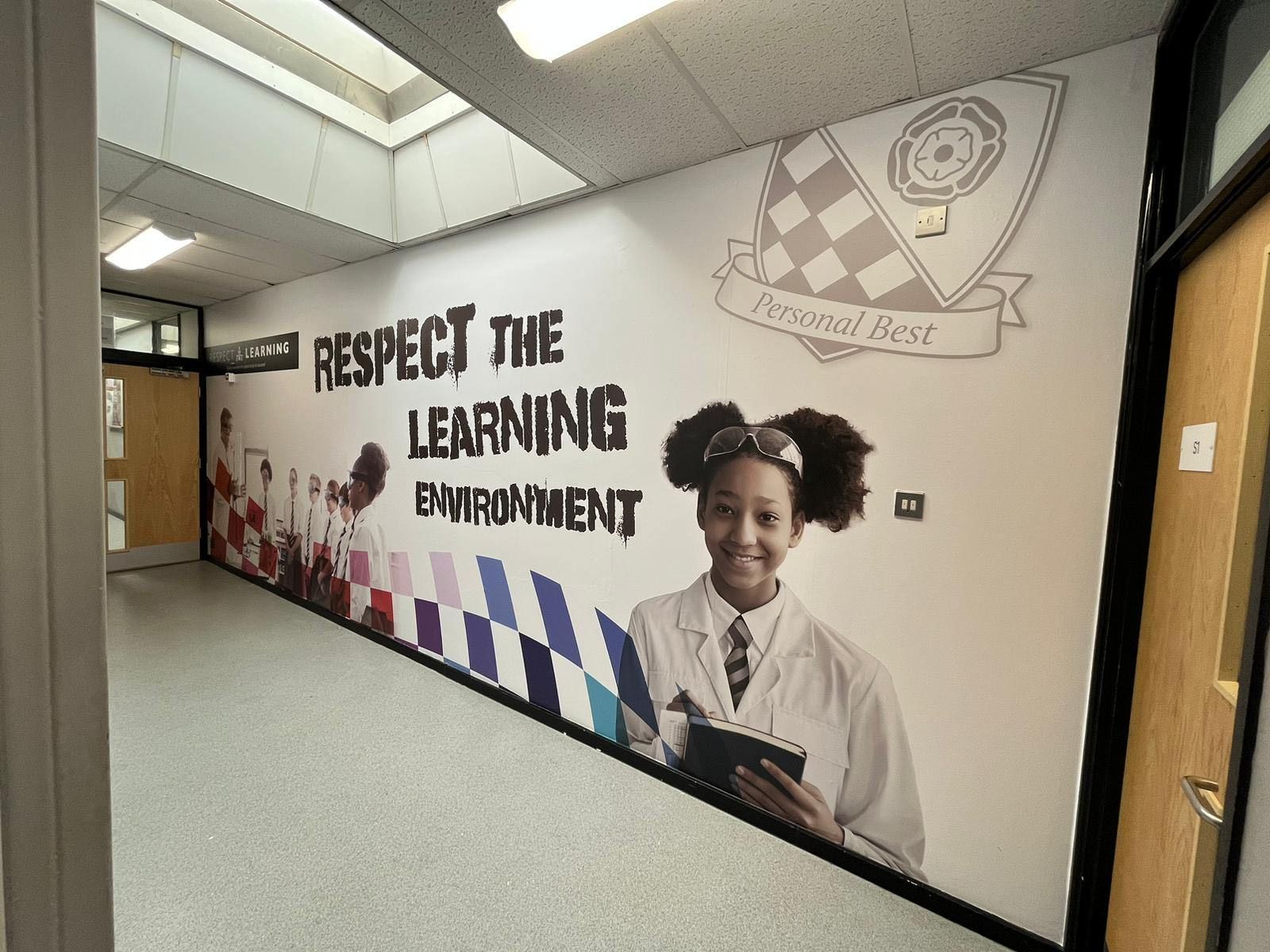
Incorporating exploration elements, like figures or scientific symbols, into designs can showcase the importance of learning and curiosity in education.
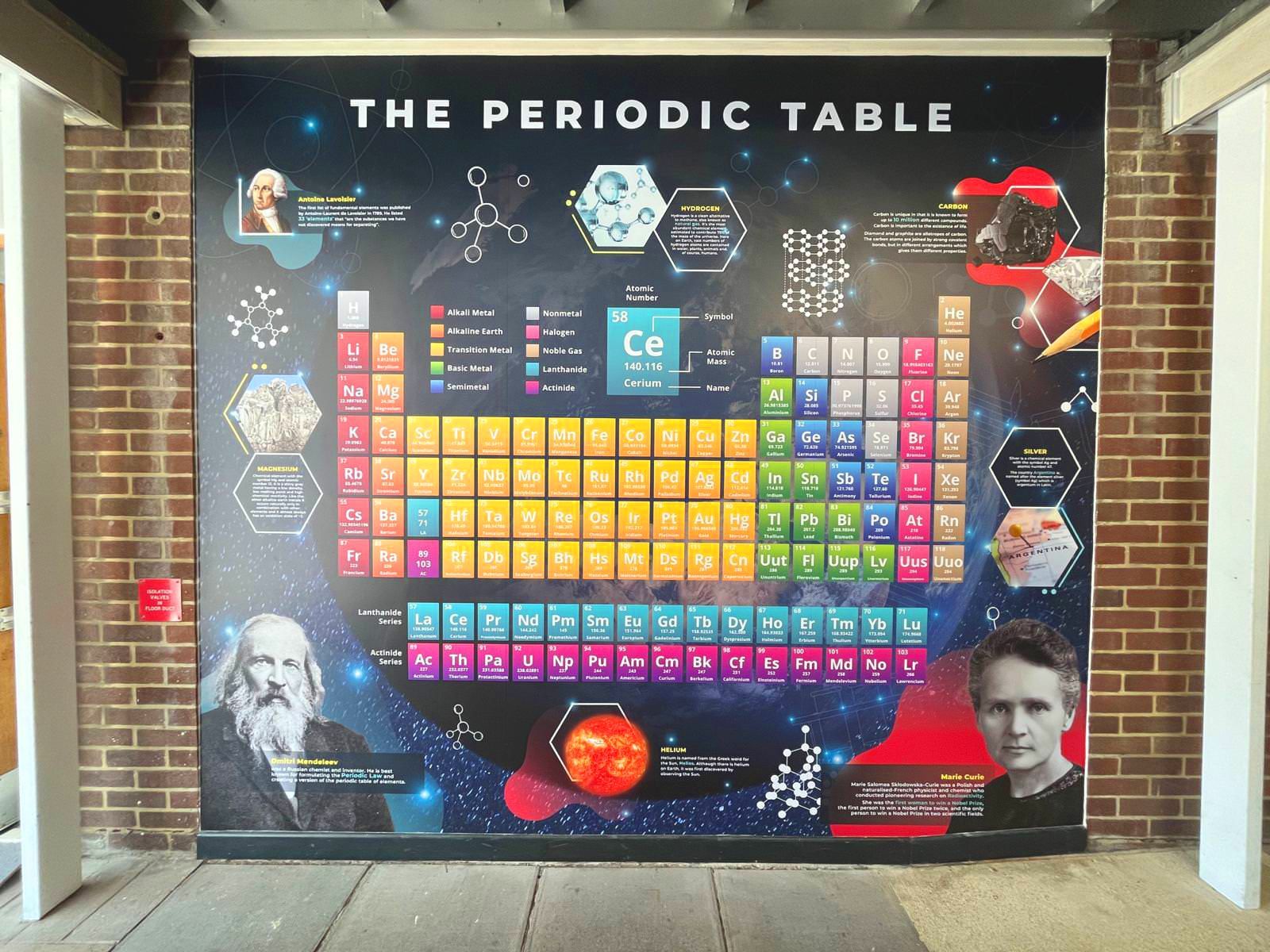
Encouraging Education and Inquisitiveness Through Wall Art.
Designing wall graphics that feature figures and scientific icons alongside references can ignite a passion for learning and spark intellectual curiosity in students.
Crucial Design Factors for Education and Inquisitiveness
- Let's delve into the lives of personalities and significant moments in history;
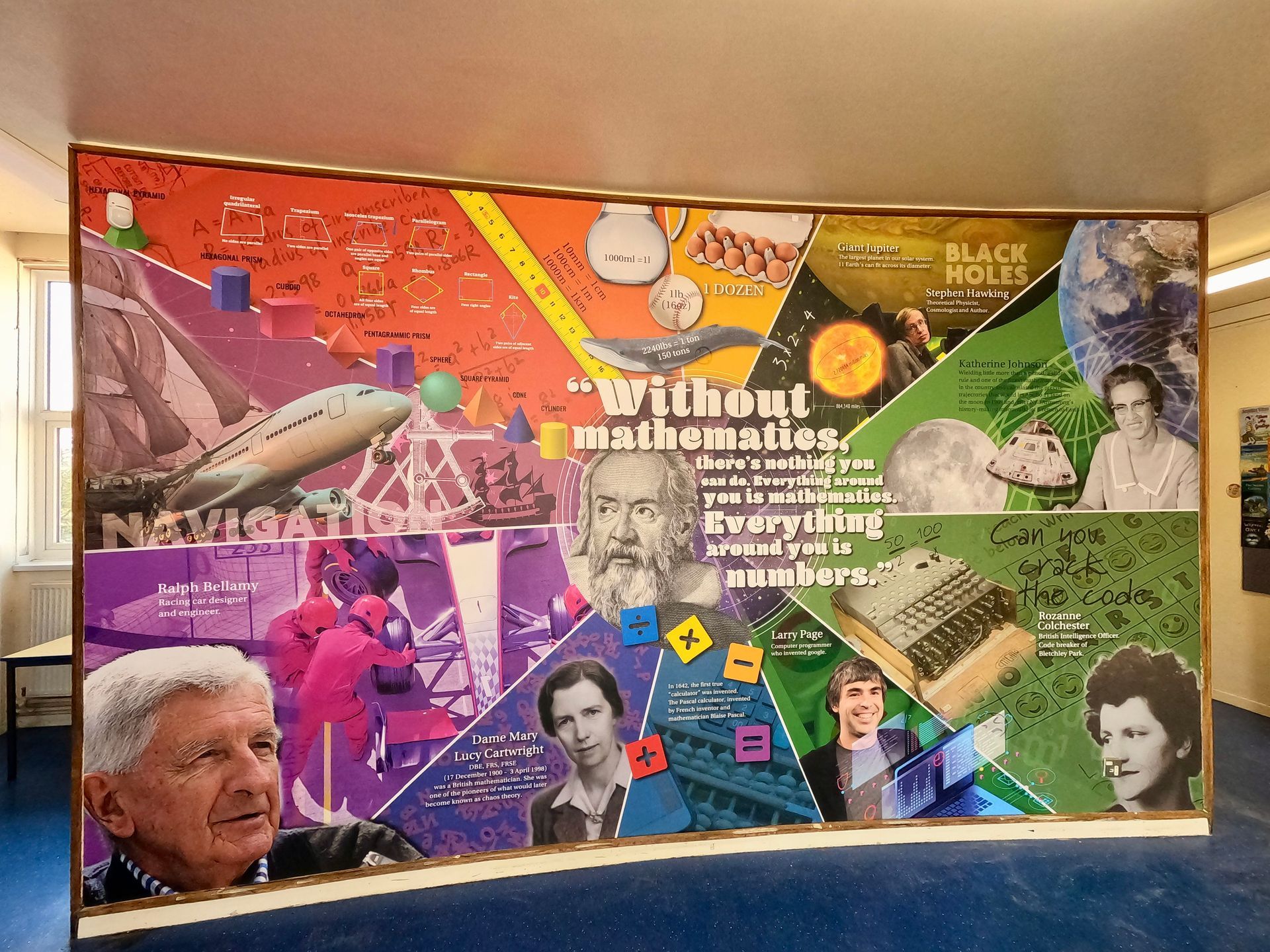
- Feature. Short life stories of historical figures showcase their impact and encourage students to delve deeper into their accomplishments.
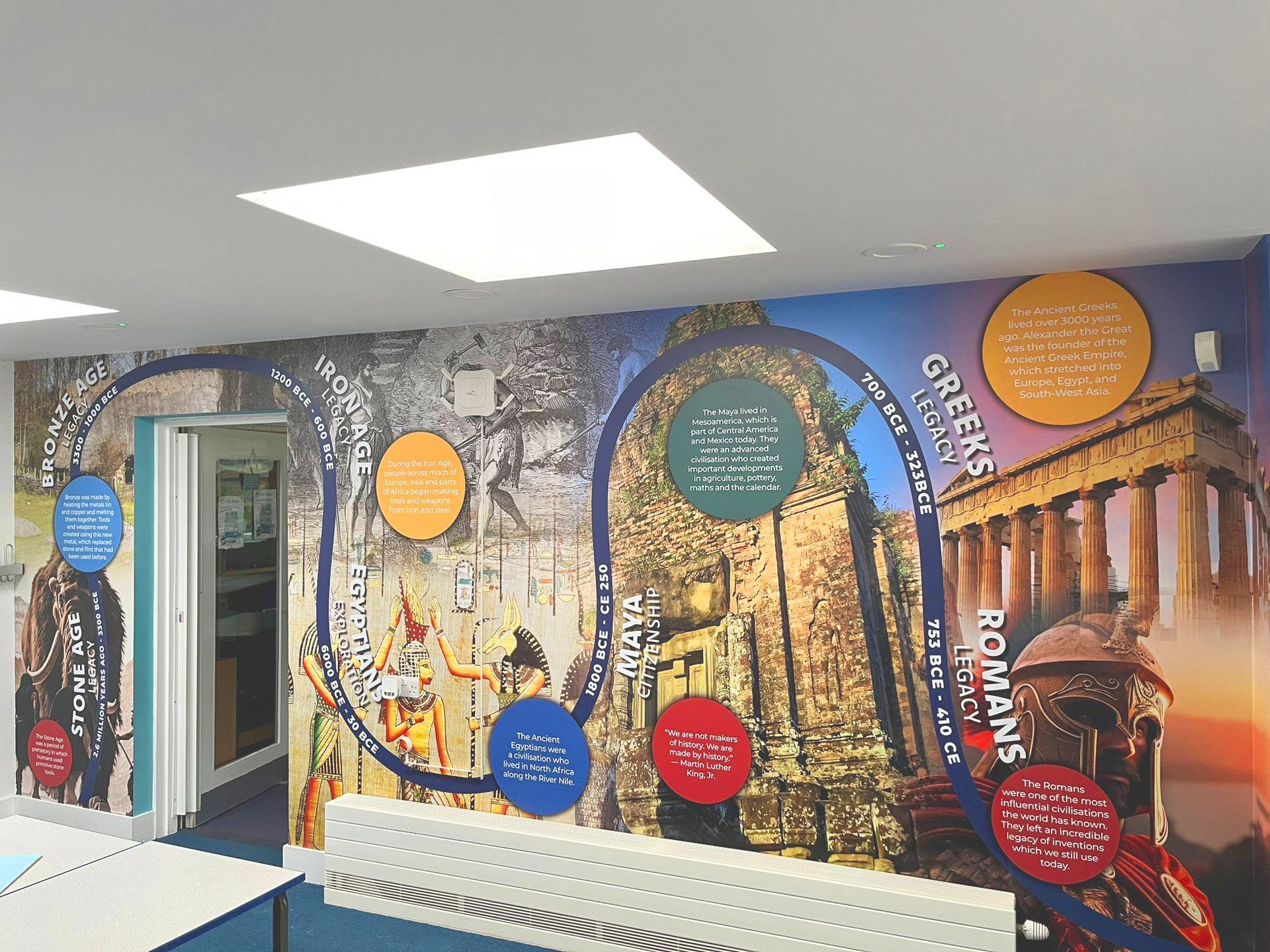
- Craft visually engaging timelines highlighting occurrences and milestones to offer context and spark historical interest.
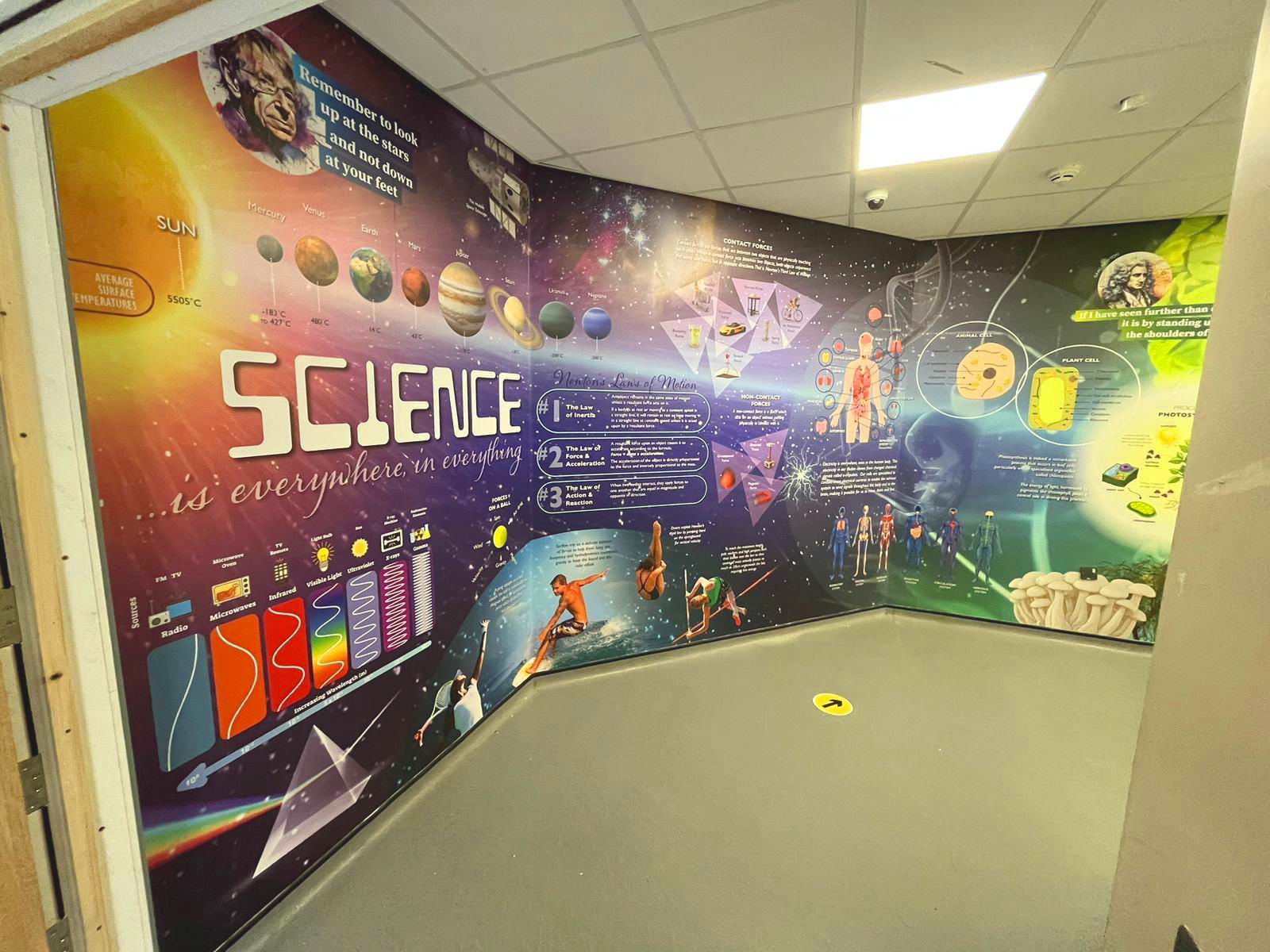
Concepts in the field of science;
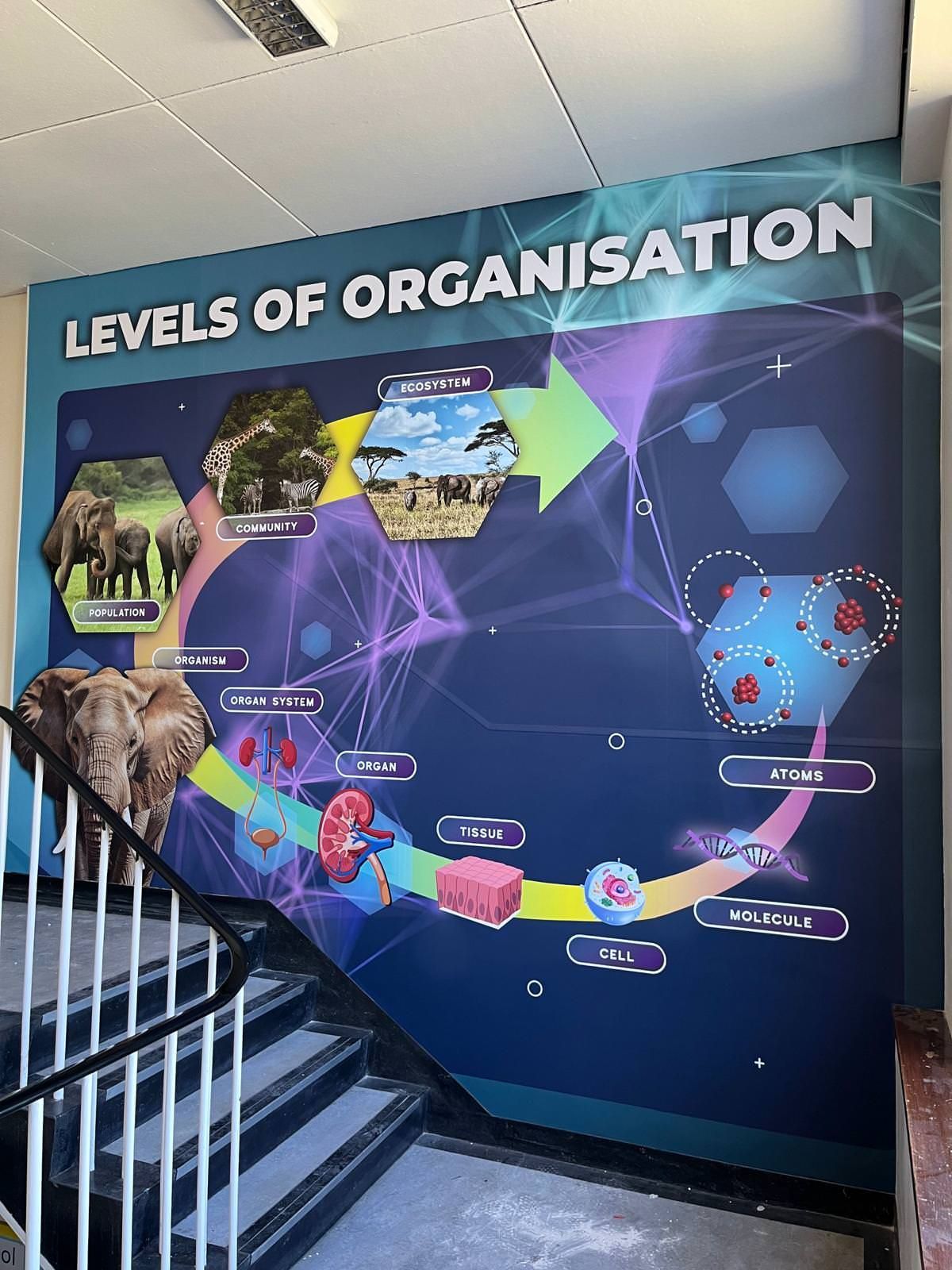
- Utilise visual aids, like infographics, to illustrate ideas such as the solar system dynamics or the components of the periodic table and human anatomy.
- Illustrate the tools and breakthroughs and elucidate their importance in the field.
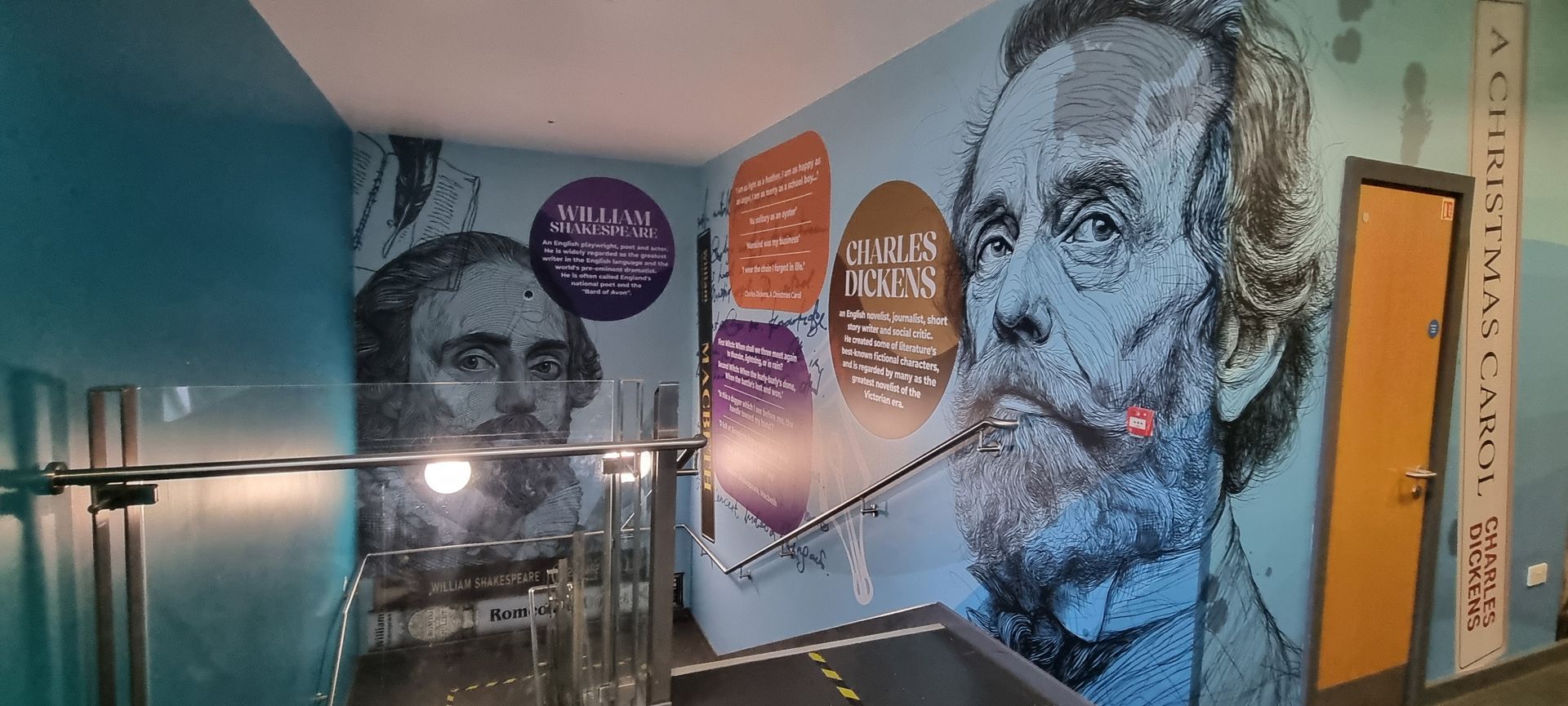
Quotes by known writers and poets that spark contemplation and a passion for literature are an addition to any collection of inspiring words.
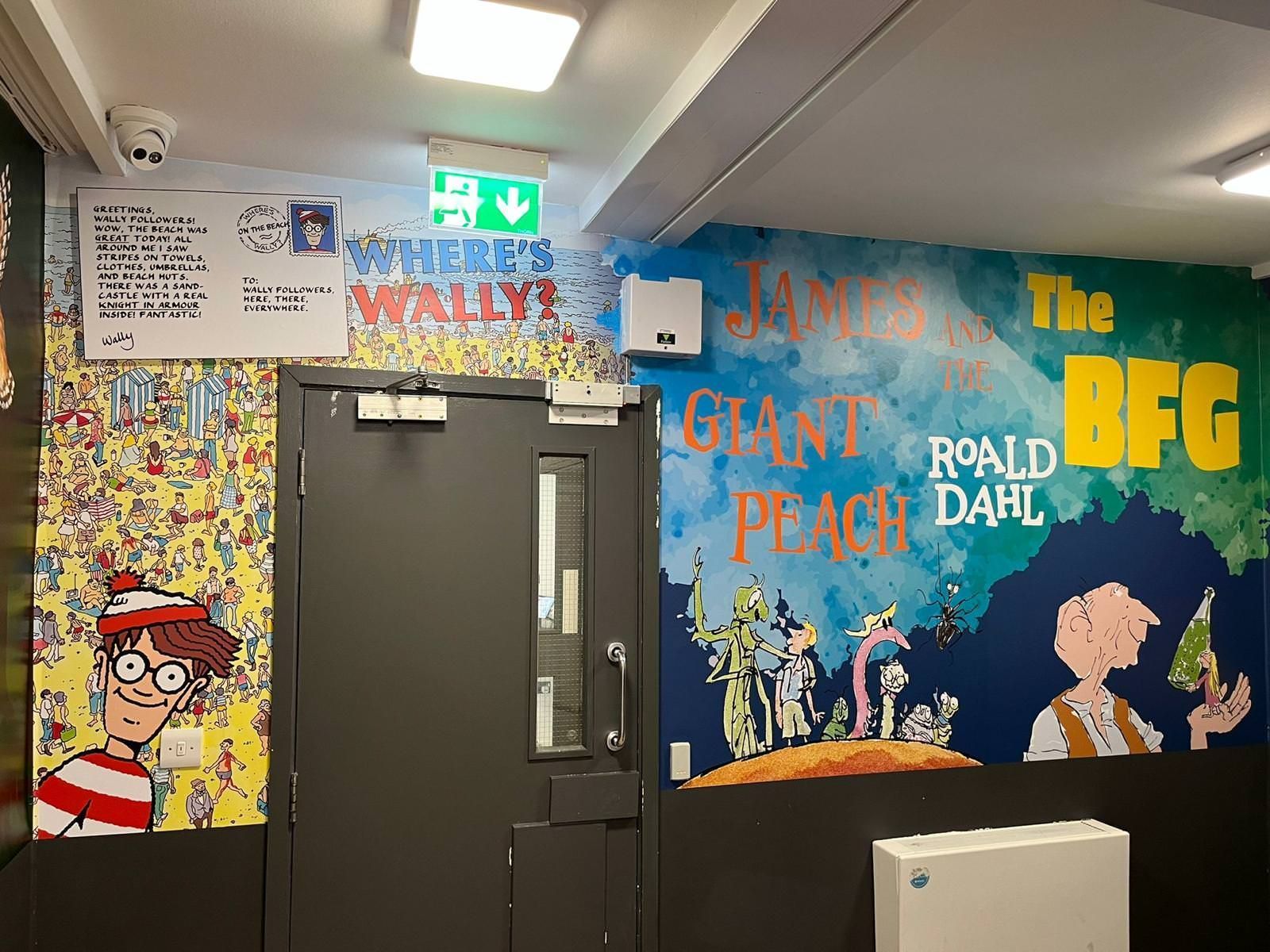
- Include characters from known classic and modern literary works to inspire readers to delve into genres and enjoy reading more deeply.
The components of exploration are as follows;
- Encouraging Mystery and Discovery in Education: Create designs that inspire students to explore and uncover elements within a mural that unveil a captivating narrative when discovered.
- Incorporate features like QR codes that direct users to information, like videos or virtual tours connected to the graphic.
Optimal Positioning for Greater Influence
Let's decorate classroom walls with themes of exploration, like showcasing scientists in a science class or displaying a timeline of eras in an English class.
Let's set up Interactive Learning Corners where students can organise historical events using engaging visuals, such as a table or a magnetic board.
Passages;
- Design hallways with themes such as "Hall of Scientists," "Literary Lane," or "History Walk," showcasing individuals and noteworthy facts related to each theme.
- Utilise hallway sections to showcase changing exhibits corresponding to curriculum themes or commemorate historical and scientific achievements.
The charm of libraries, cosy reading corners;
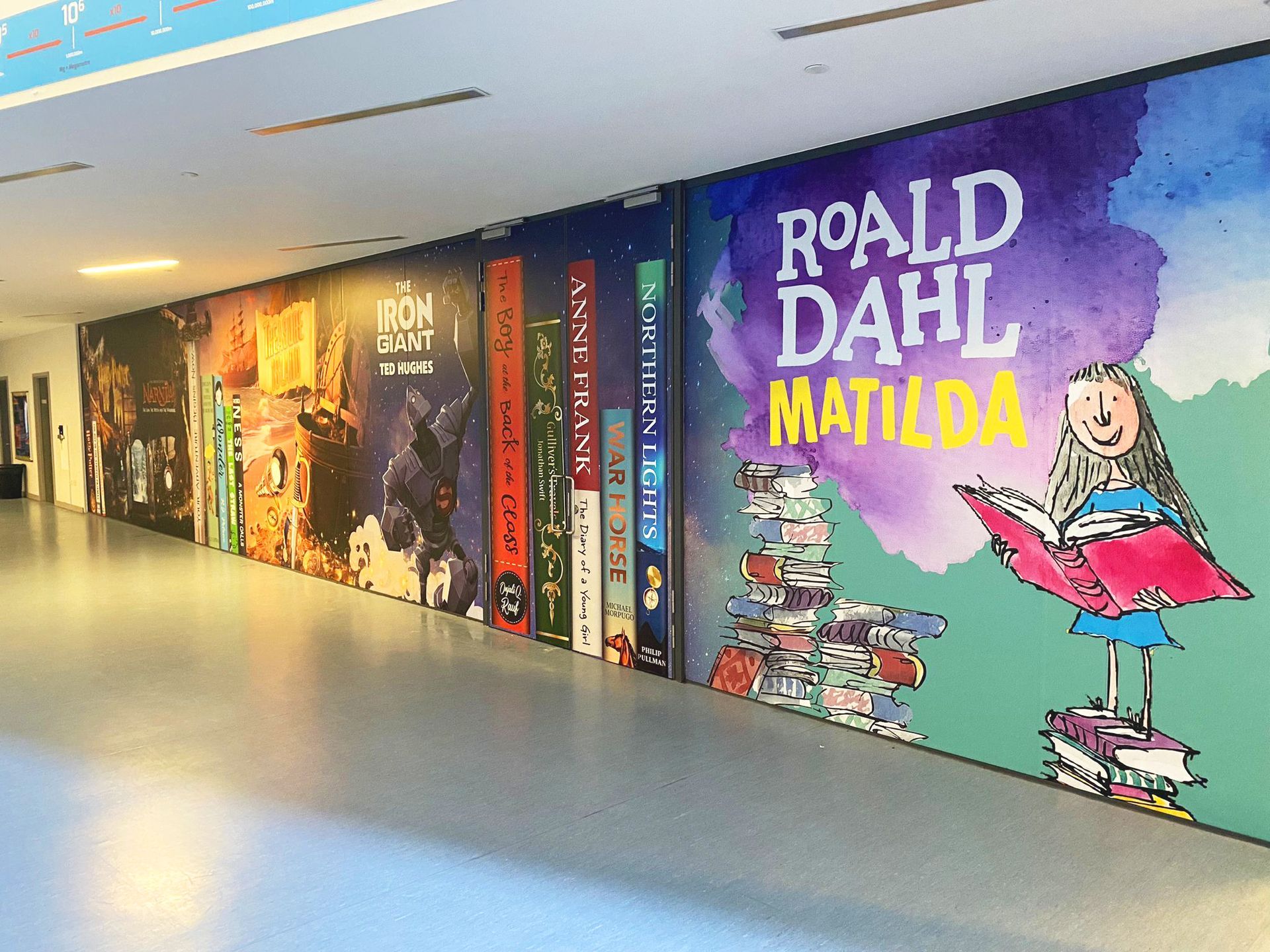
- Walls adorned with tributes to authors and beloved books showcase quotes, illustrations and suggestions for reading material.
- Integrative Story Panels are a tool for engaging students in creating their narratives and exploring various plotlines by manipulating or adjusting elements within the panels.
Let's set up spots in shared areas with captivating artwork, like a mural of the night sky showcasing constellations and planetary facts.
- Try incorporating exploration boards into your teaching approach. Encourage students to share questions and exciting discoveries. This will cultivate an environment focused on learning and curiosity.
Approach to Putting Plans into Action
The process of designing ;
- Involve teachers and students in the design process to ensure the visuals align with objectives and appeal to their interests.
- Expert Designers: Collaborate with designers specialising in settings to craft top-notch and captivating visuals.
Choosing the materials;
- Select child materials to ensure the safety and well-being of children during playtime.
- Choose alternatives by selecting sustainable materials to encourage eco-consciousness.
- You must control the installation to guarantee safety, a pleasing outcome, and the prevention of alignment or damage issues.
- Ensure the graphics are installed at heights kids can easily see and reach.
Keeping things up to date;
- Remember to clean and maintain your graphics to stay fresh and captivating over time.
- Let's schedule updates to bring ideas and maintain an engaging and dynamic environment.
Examples of Educational and Inquisitive Wall Art Designs
Historical Timeline;
- Create a timeline showcasing historical events and notable individuals, with images and concise descriptions for each entry. Differentiate between periods or geographical regions by using colours to highlight them on the timeline.
- Engagement: Gives background. Sparks curiosity in history by showing students the linkages between eras and contemporary times.
The Wall of Scientific Discovery;
- A wall showcasing breakthroughs and the brilliant minds who made them possible through detailed diagrams and explanations of the underlying concepts.
- It sparks an interest in science and motivates students to delve deeper into the world's wonders and technological progress.
Literary Fictional characters;
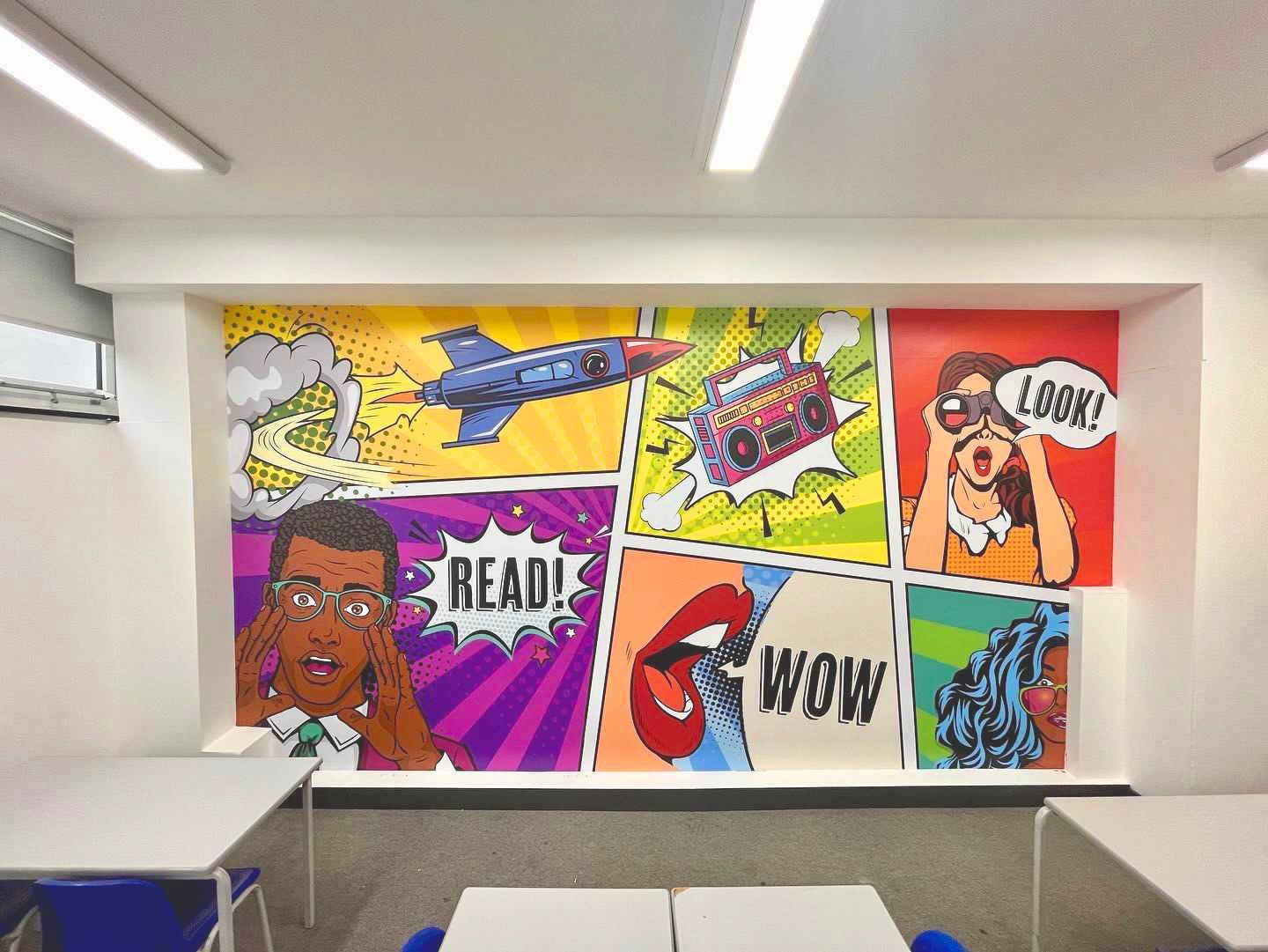
- They feature graphics showcasing quotes from literature, illustrations of beloved book characters, and concise summaries of their tales.
- Encourages a passion for reading. Exposes students to literary genres and writers.
- Let's create a board where students can share facts and queries while discovering things! We should incorporate features like QR codes that connect them to videos or articles for a richer learning experience.
- It encourages a sense of wonder. Motivates students to share and investigate concepts, fostering an environment of curiosity.
In conclusion, here are some last reflections.
Integrating aspects of exploration, like personalities from history books and science legends, alongside references to literature in wall graphics has the power to ignite a passion for learning and spark curiosity among students. The visual appeal of these graphics not only beautifies the school environment but plays a crucial role in fostering exploration and active involvement across different academic disciplines. This method contributes to establishing an engaging setting that motivates students to seek knowledge and explore fresh areas of interest.